Subscribe our Newsletter
Amet minim mollit non deserunt ullamco est sit aliqua
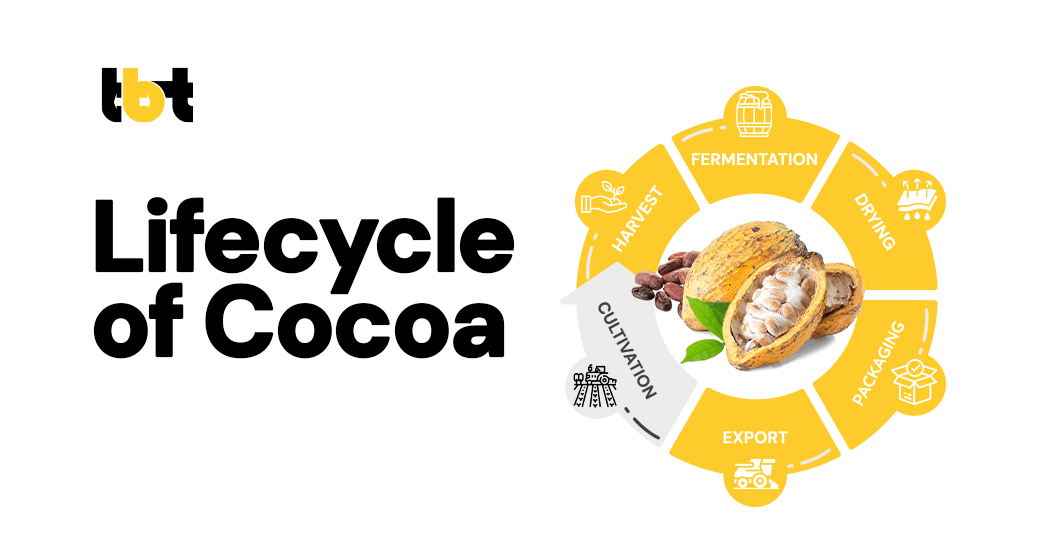
Cocoa is one of Nigeria’s most valuable export commodities, supporting thousands of farmers and powering industries across the world. But behind every bar of chocolate lies a detailed process that begins on local farms and ends in global markets.
Here’s a look at the six key stages of the cocoa lifecycle.
The cocoa journey begins with cultivation, where farmers plant high-quality seeds or hybrid seedlings in fertile, well-drained soils. Cocoa grows best in humid, tropical climates with steady rainfall — conditions found in regions like Ondo, Cross River, and Ekiti.
Farmers nurture young trees with proper spacing, mulching, and shading to protect them from direct sunlight. It takes about three to five years for cocoa trees to mature and start producing pods.
When cocoa pods turn yellow or reddish-orange, they are ready for harvest. Farmers pick the pods carefully using knives or cutlasses to avoid damaging the trees. Each pod contains 20 to 40 cocoa beans, surrounded by a sweet, white pulp.
Once harvested, the pods are opened to extract the beans. Proper timing and handling during harvest are essential to maintaining quality and flavor.
After the beans are extracted, they undergo fermentation for five to seven days. This process transforms the raw beans, developing their characteristic aroma and flavor while reducing bitterness.
Beans are usually heaped in boxes or covered with plantain leaves to allow natural fermentation. The result is a higher-quality product that meets export standards.
After fermentation, cocoa beans are spread out to dry under the sun for about five to ten days. This reduces the moisture content to below seven percent, preventing mold and ensuring long-term preservation.
Proper drying also improves the color, taste, and aroma of the beans, factors that determine market value.
Once fully dried, cocoa beans are cleaned, sorted, and packed into jute or sisal bags that allow airflow and prevent spoilage. Each bag typically weighs 60 to 100 kilograms.
The beans are then stored in cool, dry warehouses before being inspected, graded, and prepared for export.
The final stage is export, where Nigerian cocoa beans are shipped to major markets in Europe, Asia, and North America. There, they are processed into chocolate, cocoa powder, and other derivatives.
Exporters work with licensed agents, logistics partners, and quality inspectors like TBT Agro to meet global trade standards.
From cultivation to export, every stage of cocoa production requires collaboration, consistency, and care. At TBT Agro, we’re building systems that make this possible by empowering farmers, traders, and exporters through technology and trust.
Cocoa and other commodities are currently available on our platform for verified buyers and processors looking for high-quality raw beans sourced directly from Nigerian farmers.
We invite agribusinesses, traders, and food manufacturers to explore TBT Agro and experience the future of agro-commodity trading.
Follow us on Instagram: @tbt_agro
TBT Agro — Strengthening Nigeria’s agricultural value chain, one commodity at a time.
Amet minim mollit non deserunt ullamco est sit aliqua